
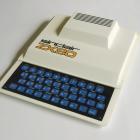
ZX80, the world’s smallest and cheapest computer at the time, which was to have a powerful impact on the manufacture and sale of personal computers in the UK, was introduced in February.
Current news

The Cambridge Centre for Computing History (UK) held a fascinating event on 21 February ? a Night of Retro Gaming. Visitors could get to know and try rare consoles and games of historic times.

Every year the US Postal Service (USPS) issues postage stamps that feature famous personalities.

The Centre for Computing History in Cambridge, UK, has announced that in the future it will collaborate with John Silvera, the inventor of FUZE, a portable computer and workstation designed for educational purposes.

On 5 February the National Museum of Computing in the UK celebrated the 70th “birthday” of the legendary Colossus, which played a significant role in World War Two.
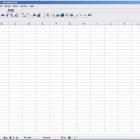
IBM’s first killer application, the Lotus 1-2-3 spreadsheet programme for PCs, was launched on 26 January 1983.
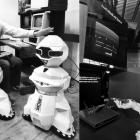
The big-time Consumer Electronics Show, CES, launched in 1967, has always strived to provide an insight into the future of high-tech.

The Manchester Museum of Science and Industry hosted an event organised by the British Computer Conservation Society.

Charles Babbage (1792-1871), British mathematician and inventor designed two prototype mechanical computers, but failed to complete either during his lifetime.
