
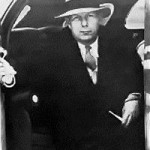
Seventy years ago on 20 December 1943, Thomas Watson Jr. (1914-1993), to become IBM’s second president, informed James B. Conant (1893-1978), president of Harvard University, that America’s pioneer in the design profession, Norman Melancton Bel Geddes (1893-1958), the renowned theatre set creator and industrial designer would create the case for IBM’s forthcoming electro-mechanical computer, the Automatic Sequence Controlled Calculator (ASCC), later to be renamed as Harvard Mark I. Known to be a futuristic designer famous for his extraordinary designs of cars, motorways and transportation systems, Bel Geddes also created General Motors Pavilion for the World Fair in 1939. The American postal service issued a stamp in 2011 to pay a tribute to his professional achievements.
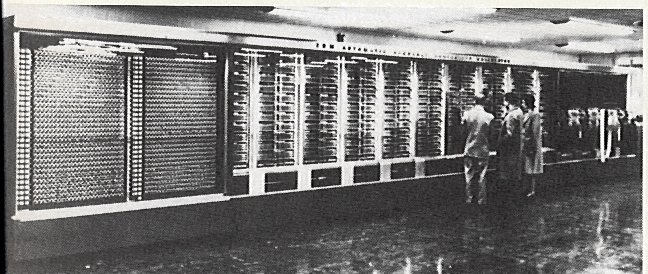
Considered to be the precursor to modern digital computers, Mark I was developed by Howard H. Aiken (1900-1973), one of the prominent figures in American computer science. It was in 1937 that he proposed to construct a calculator for scientific purposes which he envisioned as totally automatic, capable of working with positive and negative numbers, handling operation sequences and more complex functions. These were the guiding principles for the construction of Mark I in 1944 to be followed by Mark II in 1946, and later on by Mark III and Mark IV.
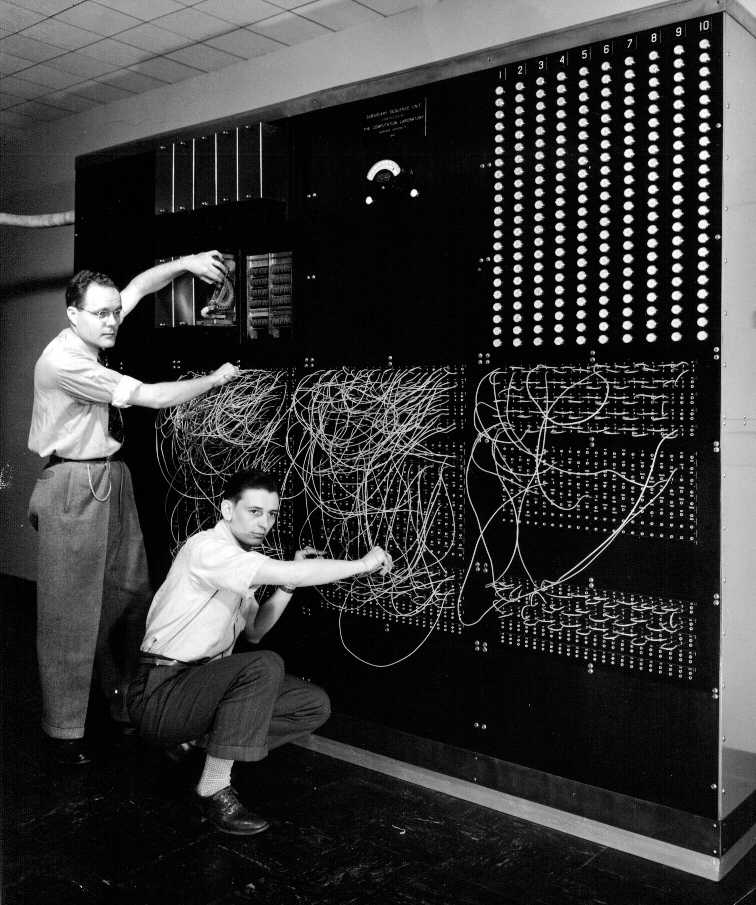
What is known as Harvard architecture was developed for the Mark machines. This principle in computer architecture implied that pathways for programme instructions and data were physically separated, and sent to the processor. Mark I stored instructions on a 24-bit wide punched tape, while data were stored in electro-mechanical counters. Harvard and von Neumann architectures are used alike in the design of modern processors in order to utilise the benefits of both principles.